Away from the mangroves and the muddy rivers, Cape York has another side: clear water, reef edges, headlands and strong tidal currents where fast pelagic fish hunt baitfish. Spanish mackerel, giant trevally and queenfish are among the most sought-after. They are fast, strong and exciting to catch, whether on a trolled lure, a cast popper or a live bait.
This guide covers the main pelagic species, where to find them around the Peninsula, the rules and the health risks, and how to fish safely from a boat in open water.
Spanish mackerel
75 cm
Minimum size, Qld
East coast and Gulf
~200 cm
Maximum length
Up to 70 kg
1 / 3
Possession per person
East coast / Gulf
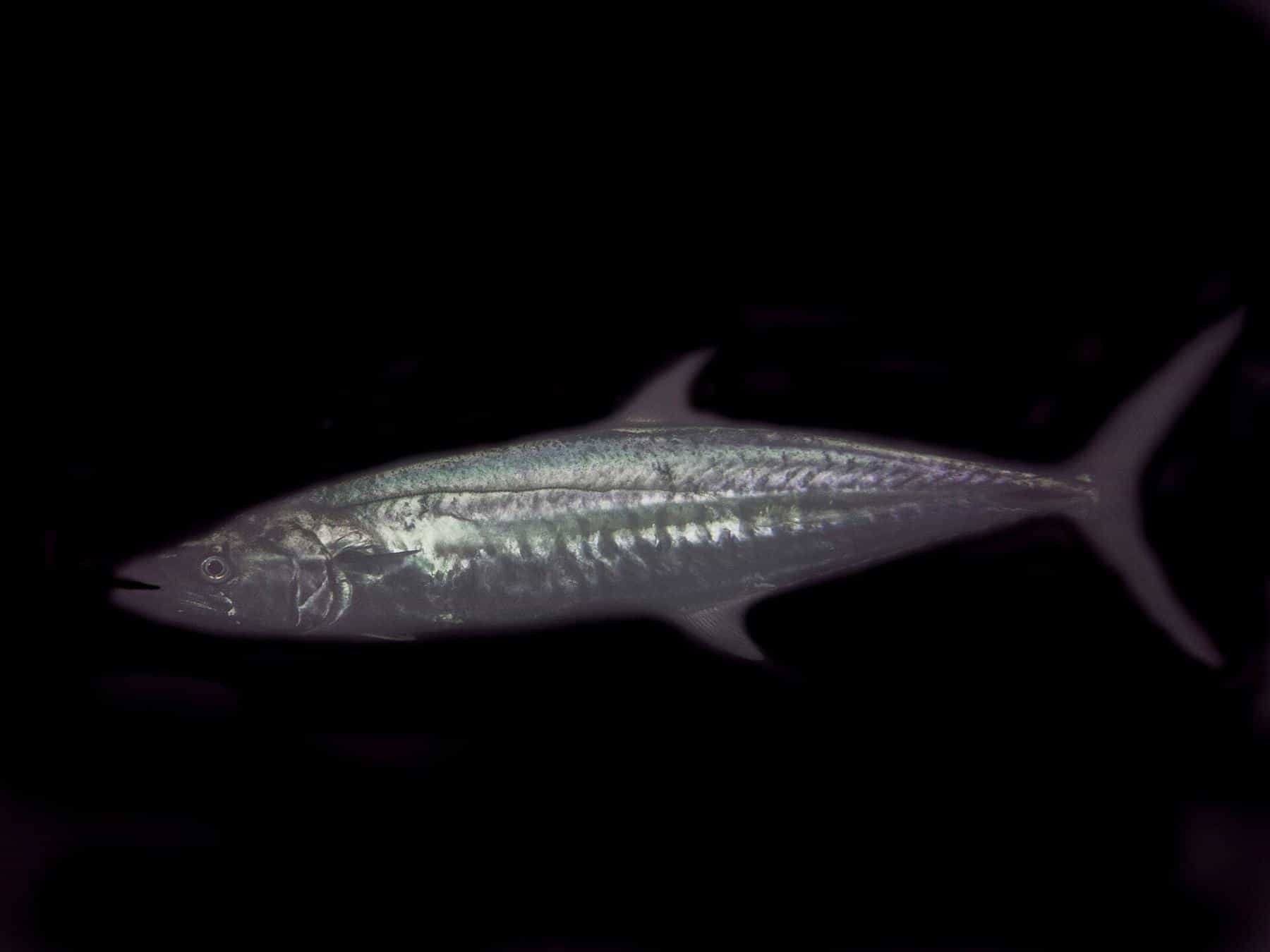
The narrow-barred Spanish mackerel (Scomberomorus commerson) is the largest of the Australian mackerels. It is vivid blue to dark grey along the back and flanks, fading to silvery blue-grey on the belly, with many narrow vertical lines down its sides. According to Wikipedia, it grows to about 200 cm and up to 70 kg. It is common down both sides of Australia, as far south as Perth and Sydney.
Life cycle
Spanish mackerel spawn in oceanic conditions on reef edges. Their eggs float near the surface, and the larvae later move inshore to coastal and estuarine waters as juveniles. Spawning is seasonal but can extend over long periods in the tropics, generally linked to warmer water. Many fisheries target pre-spawning feeding aggregations, which is one reason they are carefully managed.
Rules
In Queensland, Spanish mackerel must be at least 75 cm. Possession limits differ by region:
| Region | Possession limit | Notes |
|---|---|---|
| East coast | 1 per person, or 4 per boat with 4+ people aboard | Closed seasons apply |
| Gulf of Carpentaria | 3 per person, or 6 per boat | Check current rules |
Rules for Spanish mackerel have changed in recent years. Always check the current limits and closed seasons in the Qld Fishing 2.0 app before you go.
Giant trevally
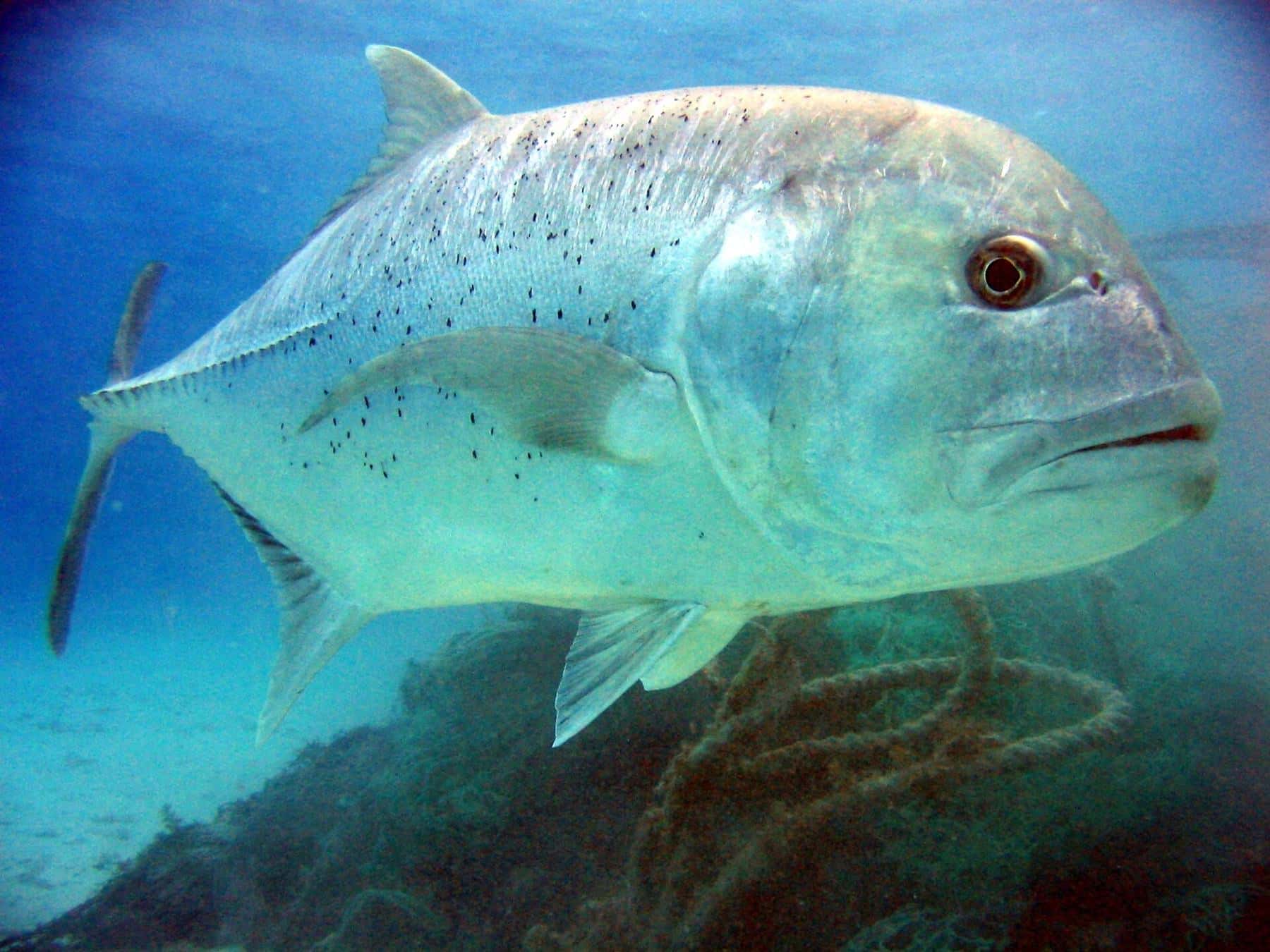
The giant trevally (Caranx ignobilis), or GT, is the largest fish in the genus Caranx, growing to a maximum known size of 170 cm and 80 kg. It has a steep head profile and strong tail scutes, and is usually silvery, with mature males sometimes black. Juveniles live in estuaries, shallow bays and lagoons, while adults move to deeper reefs, atolls and large bays. GTs are apex predators, hunting alone or in schools. They reach maturity at around 60 cm and three years of age.
GTs are famous for their power. Many anglers target them with poppers and stickbaits over reef edges and around headlands. Queensland has no size limit for trevally, but a combined possession limit of 20 for trevally species. Many anglers release GTs, which are generally considered average eating and can carry ciguatera.
Queenfish and other pelagics
Queenfish are long, silver, acrobatic fish common in northern Australian coastal waters, around river mouths, headlands and flats. They take lures readily, including surface lures, and are known for spectacular jumps. Other pelagic species around Cape York include longtail tuna, mackerel tuna, golden trevally and school mackerel. Check the current rules for each species.
Where to find pelagics on Cape York
- Headlands and points - where currents push baitfish.
- Reef edges - especially on the east coast, inside the Great Barrier Reef Marine Park. Check zoning.
- Channels and passages - the strong currents around the tip and among the Torres Strait islands. See Seisia and the tip.
- River mouths - for queenfish and trevally.
- Bait schools and birds - diving birds often show where pelagics are feeding.
Techniques
Trolling
Trolling lures or rigged baits along reef edges, drop-offs and current lines is a classic way to catch Spanish mackerel. Use wire or heavy leader, as mackerel teeth are razor sharp.
Casting
Poppers, stickbaits and metal lures cast at feeding fish, reef edges and bait schools are effective for GTs, queenfish and tuna. This style needs heavy tackle and strong knots.
Live and dead baits
Floating a live bait near a reef edge or a bait school can be very effective for big mackerel.
Ciguatera
Ciguatera fish poisoning comes from eating warm-water fish that carry a toxin produced by a microscopic organism living on algae on reefs. According to the Queensland Government, small plant-eating fish eat the algae and in turn are eaten by larger predatory fish. Spanish mackerel and trevally are among the fish listed as possible carriers, and cases are often linked to larger predatory fish.
The toxin does not change the appearance, smell or taste of fish, and cooking and freezing do not destroy it. Chinamanfish, red bass and paddletail are particularly high risk and are no-take species in Queensland. If you develop symptoms after eating reef fish, seek medical help.
Boat safety in open water
Pelagic fishing usually means heading into open water, often far from help:
- Use a suitable, seaworthy boat and check the weather carefully.
- Carry required safety gear, including an EPIRB, life jackets, flares and a marine radio.
- Watch for strong currents and wind against tide, which can create steep seas.
- Tell someone your plans and expected return time.
- Be careful handling big fish with sharp teeth and hooks on deck.
Pelagic trip checklist
0 of 6 done
Ticks are saved in this browser only.
Keeping fish fresh
Pelagic fish like Spanish mackerel spoil quickly in tropical heat. The Queensland Government warns that scombroid (histamine) poisoning can occur when fish such as tuna and mackerel are not chilled and stored properly. Bleed fish promptly, put them straight into an ice slurry, and keep them cold until you cook or freeze them. Carry plenty of ice on hot days.
Releasing pelagics
Many anglers release GTs and other pelagics. Use single hooks where practical, keep fish in the water during unhooking, and revive them by holding them facing into the current until they swim away. Sharks are common around reefs, so release fish quickly and move on if sharks are taking hooked fish.
Key points
Pelagics in brief: Spanish mackerel must be at least 75 cm, with lower possession limits and closed seasons on the east coast; trevally have no size limit but a combined possession limit of 20; Spanish mackerel and trevally are among the fish that can carry ciguatera; and much of the east coast lies within the Great Barrier Reef Marine Park, where zoning applies. Bleed and ice fish quickly, release what you don't need, and only head offshore in a seaworthy boat with the right safety gear and a good weather window.
Related guides
Read Seisia and the tip and fishing rules and closed seasons.
Frequently asked questions
What is the size limit for Spanish mackerel in Queensland?
Spanish mackerel must be at least 75 cm. On the east coast the possession limit is 1 per person or 4 per boat with four or more people aboard, and closed seasons apply. In the Gulf it is 3 per person or 6 per boat. Check current rules before you fish.
Is there a size limit for giant trevally?
Queensland has no size limit for trevally, but there is a combined possession limit of 20 for trevally species. Check the current rules before you keep fish.
Can Spanish mackerel cause ciguatera?
Yes. The Queensland Government lists Spanish mackerel among the fish that can carry ciguatera toxin. Larger predatory fish are more often implicated.
How big do Spanish mackerel grow?
According to Wikipedia, Spanish mackerel grow to about 200 cm and up to 70 kg, and they are the largest of the Australian mackerels.
How big do giant trevally get?
Giant trevally are the largest fish in the genus Caranx, growing to a maximum known size of 170 cm and 80 kg, according to Wikipedia.
Sources and further reading
Facts on this page were checked against these primary and official sources. Conditions change — confirm before you travel or buy.
- Narrow-barred Spanish mackerel — Wikipedia
- Giant trevally — Wikipedia
- Size and possession limits in tidal waters — Queensland Government
- Naturally occurring seafood toxins — Queensland Government
- Zoning — Great Barrier Reef Marine Park Authority